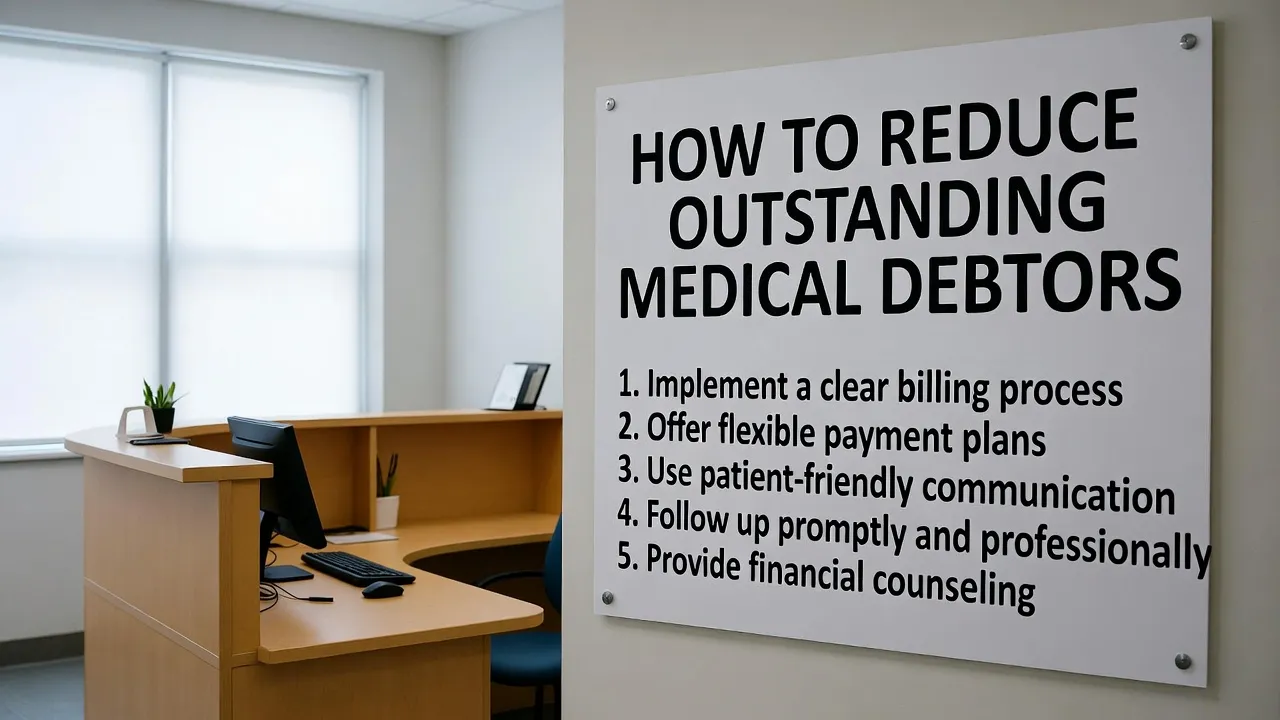
An overdue account may only become noticeable when it appears on an ageing report, but the problem often starts much earlier.
It could begin with outdated patient details, unclear payment responsibility, delayed account submission or a follow-up that simply did not happen. By the time an account has been outstanding for 60 or 90 days, resolving it may require considerably more work.
For South African medical practices, effective medical billing services should therefore do more than follow up on unpaid accounts. The entire process, from patient registration and billing through to payment and debtor management, needs to work together.
1.Start With Accurate Patient Information
Good debtor management begins before an account becomes overdue.
Patient contact information should be checked regularly, particularly mobile numbers and email addresses used for statements and reminders. Medical scheme membership details should also be captured accurately, and patients should have clarity around amounts for which they may be personally responsible.
These may seem like basic administrative tasks, but they have a direct impact on medical billing services later in the process. There is little value in repeatedly sending an account to an outdated email address or trying to resolve a balance using information that was incorrect from the start.
2. Don’t Let Billing Delays Become Payment Delays
Practices should also consider how quickly an account moves from consultation or procedure to billing.
If information sits incomplete for several days, or queries between the practitioner and billing team are not resolved promptly, the payment cycle starts later.
Good medical billing requires clear processes for getting the necessary information to the right person at the right time. Practices should have a reasonable understanding of how quickly accounts are normally processed and investigate when particular accounts regularly fall outside that timeframe.
A debtor problem can sometimes be a billing-process problem in disguise.
3. Understand Why the Account Is Outstanding
Not every unpaid account requires the same response.
One account may be awaiting a medical scheme response. Another may have been partially paid, leaving an amount for which the patient is responsible. Another may have received no response despite previous communication.
Effective medical billing services should help practices distinguish between these situations.
Simply sending the same reminder repeatedly may not solve the underlying problem. The practice first needs to understand why the account remains unpaid and what action is appropriate.
This is where an ageing report becomes more than a list of outstanding balances. Used properly, it can help identify which accounts need attention and why.
4. Follow Up Earlier, Not Just More Often
The older an account becomes, the more complicated it can be to resolve.
Staff may need to work backwards through consultation records, previous claims, account notes and patient correspondence to establish what happened. Details may also be harder to clarify several months after the original consultation.
A structured debtor-management process should define when follow-up starts, who is responsible and what happens when an account remains unresolved.
From a medical practice management perspective, consistency is important. Debtor follow-up should not depend entirely on whether someone happens to have enough time that week.
The aim is not aggressive collection. It is timely, professional and appropriate follow-up.
5. Look for Patterns in Your Debtor Book
The total amount outstanding is important, but the reasons behind those balances can tell a practice much more.
Are accounts becoming older before someone follows up? Are particular types of accounts regularly causing problems? Are patient-responsible amounts difficult to collect? Are billing queries remaining unresolved for too long?
If the same issue appears repeatedly, treating each account individually will not address the underlying cause.
This is an important part of medical practice management. Your debtor book can highlight weaknesses elsewhere in the practice, from patient data capture to billing workflows and follow-up procedures.
6. When Does a Medical Bureau Make Sense?
There may come a point where internal staff are spending a disproportionate amount of time managing older or increasingly complicated accounts.
This is where support from a medical bureau can be useful.
A bureau providing professional medical billing services can assist with account administration, billing and debtor management while giving the practice greater structure around how outstanding accounts are handled.
7 .Fix the Process, Not Just the Debtor Book
Synchramed supports South African healthcare practices with medical billing services, account administration, medical bureau services and medical debt collection.
The aim is not simply to recover outstanding amounts. Effective debtor management should also help a practice understand why accounts are becoming overdue in the first place.
If your outstanding balances are growing, the solution may not simply be to follow up more often. It may be time to look at the processes feeding into the debtor book and identify where accounts are getting stuck.
A Synchramed practice assessment can help examine your current medical billing and debtor management processes, identify gaps and determine where practical changes could make the biggest difference.
Contact Us and View Our LinkedIn